The problem, in one paragraph
Around 2.5 billion people still cook on solid biomass; WHO links household air pollution to about 2.5 million premature deaths a year. Cooking on solid fuels and kerosene accounts for roughly 2% of global CO₂e and about half of black-carbon emissions. In India the Ujjwala scheme connected crores of homes to LPG, but refill rates lag — many families drift back to wood the moment a cylinder runs out. Clean cooking is the unfinished agenda of rural health, women's safety and forest protection.
Why a stove and not a cylinder
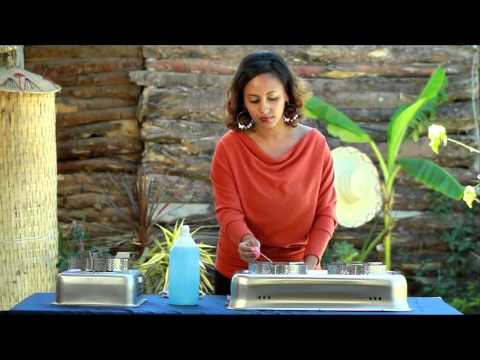
A CleanCook programme gives a family a durable, patented stove and a fuel bought by the litre from a distillery in their own district. There is no cylinder to wait for, no pressure, no regulator to leak, no smoke. The stove lights with a matchstick and one litre cooks for five people for a day. Unlike a one-time distribution, the fuel chain keeps the programme alive — and keeps it reporting.
Schedule VII mapping (Companies Act, 2013 — Section 135)
(i) Promoting health care, including preventive health care, and sanitation — indoor air pollution; (ii) promoting education, including for children and women — girls' school attendance; (iii) promoting gender equality and empowering women — time and safety; (iv) ensuring environmental sustainability, ecological balance, protection of flora and fauna, conservation of natural resources — forests, emissions; (x) rural development projects. Deployments in aspirational districts and tribal belts score on all five.
What you can measure and report
Stoves installed and in use (spot checks and QR-tagged units); litres of ethanol dispensed per household; cooking hours; firewood avoided (UNHCR benchmark: nearly 4 tonnes per family per year); hours of collection time returned to women and girls; school attendance; indoor PM2.5 and CO where measured; and tonnes of CO₂e displaced. All map directly to BRSR Principle 6 (environment) and Principle 8 (inclusive growth), ESG disclosures and the annual CSR report under Rule 8 of the CSR Rules, 2014. Impact assessment as required for large projects is built in from baseline.
SDG alignment
SDG 3 Good Health and Well-being; SDG 5 Gender Equality; SDG 7 Affordable and Clean Energy; SDG 13 Climate Action; SDG 15 Life on Land. One programme, five goals, one dashboard.
A pilot that fits a quarter
100–500 stoves in one block or panchayat cluster; local distillery fuel supply; Anganwadi / SHG / NGO-led distribution with a registered implementing agency (CSR-1); baseline and 90-day survey; photo and video documentation; impact report suited to your BRSR, annual report and CSR committee minutes. Scale-up with carbon-credit structuring once volumes justify it, on CleanCook's existing South Pole model.
Why CleanCook specifically
Patented in India; ISO 19867 Tier 5 efficiency and Tier 5 CO at accredited labs; 110,000+ stoves and 31 million accident-free user-days; used by UNHCR, UNIDO-supported programmes and Project Gaia since 2005; India precedent with Assam Petro-chemicals and NITI Aayog in 2018; an India partner in Pune with manufacturing capacity for localisation.
SDG 3 HealthSDG 5 GenderSDG 7 Clean energySDG 13 ClimateSDG 15 ForestsSchedule VIISection 135BRSR
CSR clean cooking project · Schedule VII · Section 135 Companies Act · CSR-1 implementing agency · BRSR · ESG · impact assessment · aspirational districts · tribal welfare CSR · women empowerment CSR · Anganwadi · SHG · Ujjwala · indoor air pollution · carbon credits · SDG 3 5 7 13 15 · PSU CSR · corporate foundation · clean cookstove distribution · rural development CSR India